HOW AMERICAN HELPS ENSURE COMPLIANCE WITH NFPA 96 CODES
The National Fire Protection Association (NFPA 96) is the leading global advocate for the elimination of death, injury, property, and economic loss due to fire, electrical, and related hazards. Their primary mission is to help save lives and combat the spread of safety myths and misinformation by delivering expert knowledge through over 300 codes and standards.
The NFPA 96 Standard for Ventilation Control and Fire Protection of Commercial Cooking Operations provides fundamental safety standards and protocols for the kitchen exhaust cleaning industry. It also reflects established industry standards that help reduce the risk of commercial kitchen fires. In this guide, we will be discussing how our services help you maintain NFPA 96 compliance. We will also summarize key best practices to remember as you operate your commercial kitchen, from recommended cleaning schedules to pertinent fire codes as designated by NFPA 96 Standard.
Required Inspection Frequencies
NFPA 96 Standard is of utmost importance as it specifies how often exhaust hoods are required to be inspected for the buildup of grease, smoke, or other hazardous materials.
To see how often your exhaust system is required to receive professional inspection services, refer to the chart (NFPA 96 12.4) below.
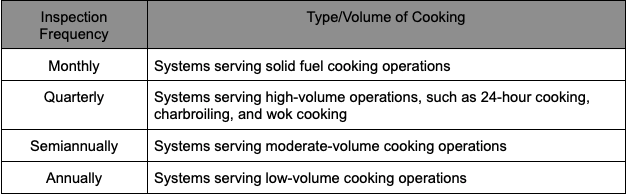
If your exhaust hood is found to be contaminated with grease-laden vapors beyond acceptable levels, the NFPA 96 requires the contaminated portions of the exhaust system to be cleaned by a properly trained, qualified, and certified person(s) acceptable to the authority having jurisdiction and in accordance with Table 12.4
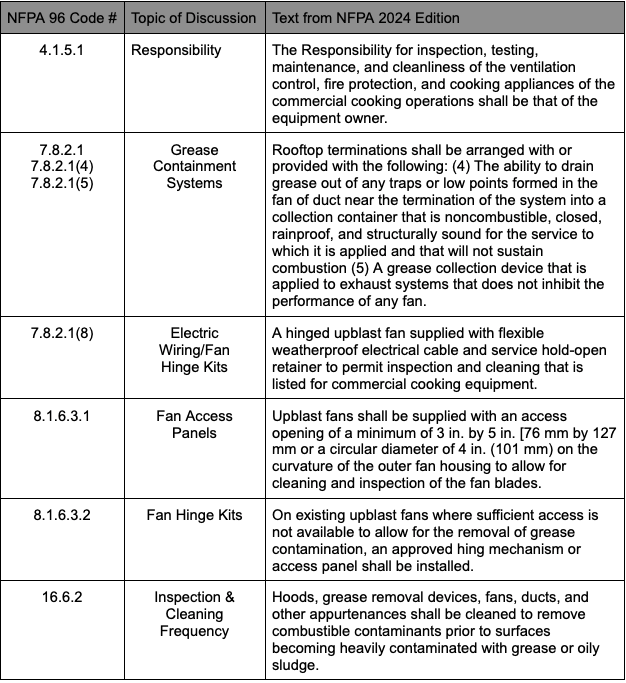
Understanding Important NFPA Codes
NFPA 96 Standard is a set of codes and standards for ventilation control and commercial kitchen fire prevention as set forth by the National Fire Protection Association.
Below, we have listed a few of the most essential codes to remember as a commercial property or restaurant owner.